
We started this because “wait and see” is not a care plan.
Most of healthcare is built to respond after something goes wrong. We built Synchronize Health to close the gap before it does — so physicians see what's changing in a patient's body while there's still time to act on it.
Built by people who kept hitting the same wall.
Synchronize Health came together because a group of clinicians, engineers, and healthcare operators kept running into the same wall from different sides of the industry. The tools to catch a problem early already existed — they just weren't talking to each other, and they weren't reaching the physician until it was already too late to matter.
It was founded by Matthew E. Mazur, Jr., who spent 25 years representing physicians in Florida and kept watching the same story end the same way: a patient leaves an appointment doing fine, deteriorates over the following weeks with no one watching, and ends up in the emergency room. The information needed to act earlier usually existed somewhere — a weight change, a lab value, a missed medication — but it never reached the physician in time. Rather than build in isolation, he brought together the clinicians and researchers who had spent their careers quantifying exactly that kind of preventable deterioration.
That shared frustration shaped a simple premise: the physiologic changes that lead to a hospitalization rarely happen overnight. They happen quietly, over weeks or months, in the space between scheduled visits — and by the time they're visible in a standard exam, the least expensive and least invasive window to intervene has often already closed.
We exist to keep that window open.
Picture the same patient, two ways.
Fluid has been building for three weeks. Nothing hurts enough to call about. By the time it does, it's a Friday night, an ambulance, and a five-day admission — the kind of week that shows up on every quality report and every family's calendar for months after.
The same three weeks look different. A signal reaches the physician while it's still just a signal — early enough for a medication adjustment and a phone call, not a hospital bed. The patient never finds out how close that Friday night came.
The evidence behind our service was built to interrupt exactly this pattern.
Physicians
Make the call earlier, with more context, instead of finding out after the fact.
Patients
Keep living their week instead of spending it in a hospital bed.
Health systems and payers
Avoid the cost before it becomes a claim, a readmission, or a quality gap.
Founded because we know what a missed signal costs.
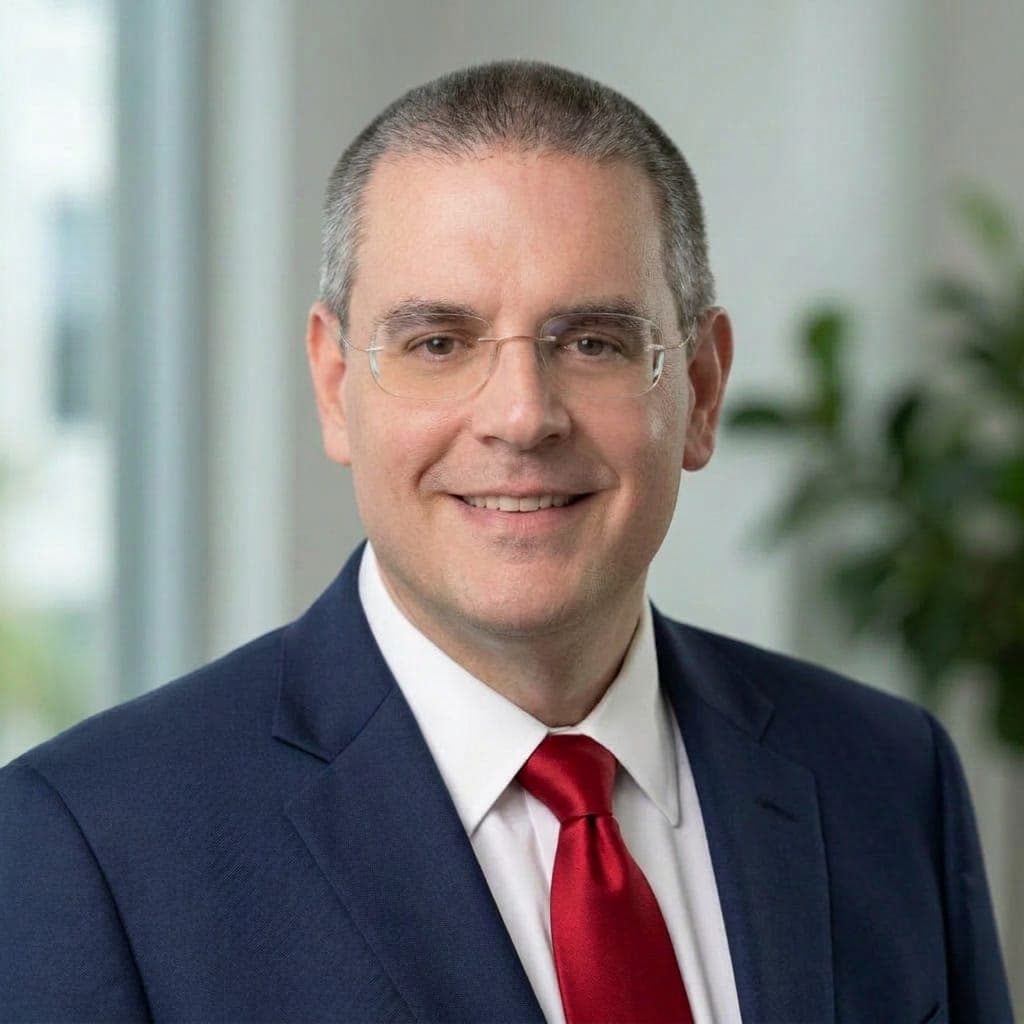
Matthew founded Synchronize Health with a single aim: give physicians the structured clinical picture their patients need between visits, so a phone call, a medication adjustment, or a referral can happen before a crisis — not after one. Rather than design a solution in isolation, he sought out leading clinical researchers who had spent their careers quantifying exactly this kind of preventable deterioration. He assembled a clinical advisory panel — including world-recognized experts in diabetes outcomes, health economics, and biomarker-driven risk modeling — and worked alongside them to architect SYNC-PREVENT™: a platform grounded in published evidence, built around FDA-cleared devices, and structured so that the physician retains full clinical authority at every step.
BBA, University of Miami (1994). JD, University of Miami School of Law (1998), cum laude. Member of the Florida Bar. Admitted to the U.S. District Courts for the Southern and Northern Districts of Florida. He still maintains his law practice, though these days his energy and time are primarily dedicated to launching Synchronize Health.
Clinical and industry oversight.
Our advisors are actively validating the SYNC-PREVENT™ protocols that will be used in patient care, alongside regulatory guidance and strategic direction for the service.
Meet the Advisors →We're still early. We're not chasing scale for its own sake — we're chasing the version of care that shows up before the crisis, not after it.
If that's the kind of partner you're building toward, we'd like to talk.